
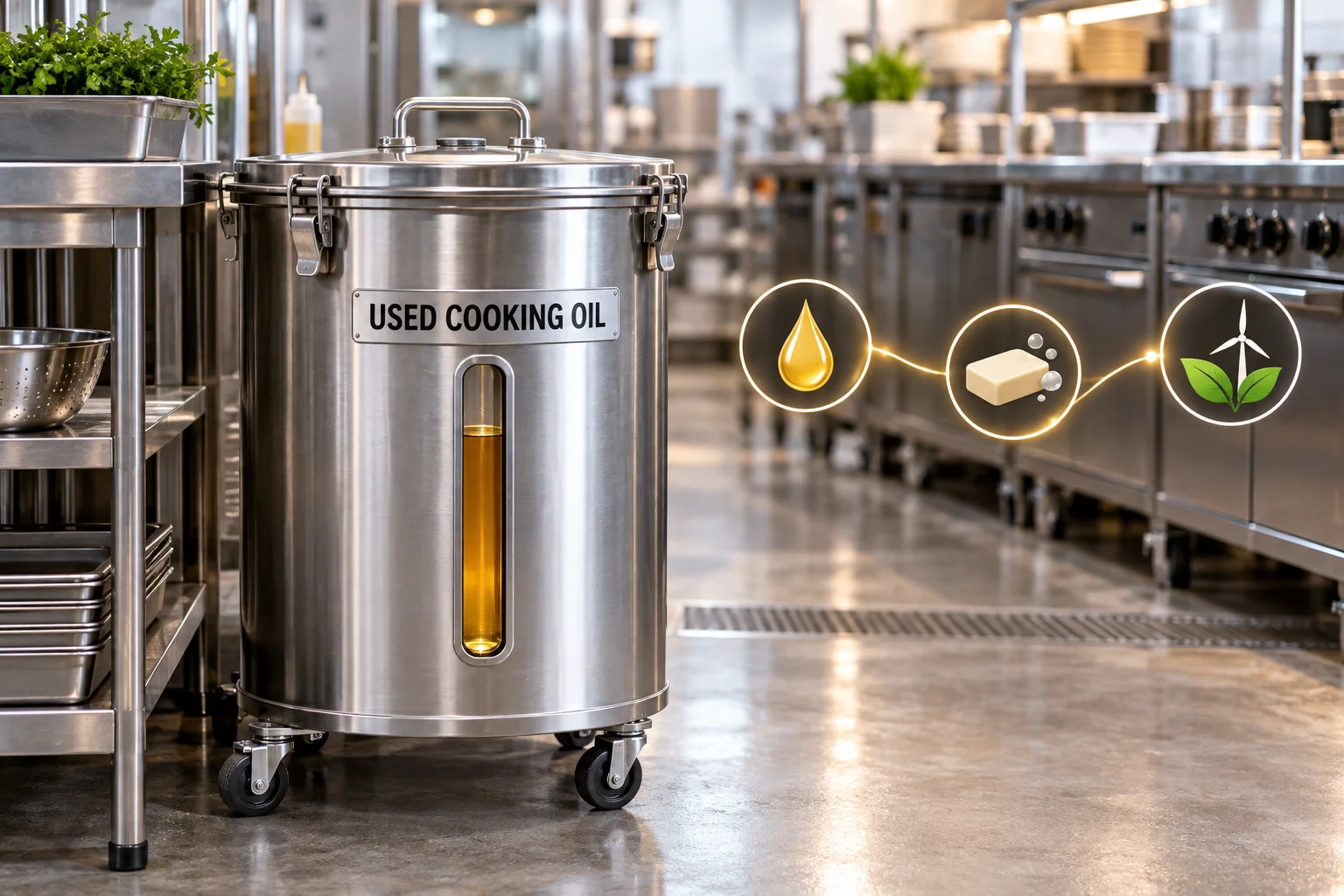
Used cooking oil and its uses extend beyond the kitchen. Once the oil is collected cleanly and sent through an appropriate recovery route, it can become a useful input for new products. For restaurants, takeaways, hotels and food manufacturers, safe handling and contamination control are essential.
The oil should remain separate from water, food waste and cleaning chemicals so a collector can assess and handle it correctly.
Used cooking oil can be recovered for uses such as biodiesel production and certain industrial applications. A commercial kitchen should let the oil cool safely, keep it free from water and chemicals, place it in a clean sealed container, and arrange collection through a suitable service provider.
Used cooking oil is edible oil that has already been used for frying or food preparation and is no longer suitable for the kitchen’s quality requirements.
The oil may contain crumbs, salt, moisture and other residue from cooking. These contaminants influence how easily it can be handled, transported and processed after collection.
Used cooking oil should never be poured into a sink, toilet, stormwater drain or grease trap. The City of Cape Town’s guidance on preventing blocked sewers advises businesses not to discharge oil, grease or fat into the sewer system. Local municipal requirements may differ, so each business should confirm the rules that apply in its area.
The final use depends on the condition of the oil, the collection system and the receiving processor. A kitchen does not decide the processing route itself, but cleaner handling can help preserve the material for responsible recovery.
Yes. Used cooking oil can be processed into biodiesel by an appropriately equipped manufacturer.
Golden Fry states that oil collected through its programme is distributed to accredited biodiesel manufacturers for conversion. This gives the oil a further use instead of allowing it to enter drains or mixed waste.
Yes, recovered fats and oils may be processed for certain soaps and other industrial products.
Suitability is not automatic. The processor must evaluate the material and apply the correct treatment for the intended product. Kitchens should avoid making claims about a specific final use unless their collector or processor has confirmed it.
A clear recovery route gives a business better visibility over where its used oil goes.
Ask the collector to explain the destination, the documents supplied after collection and any conditions that affect acceptance. This is more useful than assuming that every batch follows the same route.
A simple written procedure helps staff handle oil consistently across shifts. Adapt the process to the fryer, transfer equipment, container instructions and workplace safety procedures at the site.
Staff should follow the approved site procedure and use the correct equipment at every stage.
1. Remove loose crumbs from the fryer during normal oil care, using equipment approved for the kitchen.Water, cleaning chemicals and mixed waste can affect safe handling and may make a batch unsuitable for the collector’s intended process.
Water is also a serious hazard around hot oil. Staff should never use a mop bucket, sink container or chemical drum for used oil, even if the container appears empty.
Staff should stop adding material and contact the collector for instructions. Do not try to correct the batch by adding fresh oil or transferring it through unsuitable equipment. Label the affected container clearly so another staff member does not use it by mistake.
A basic log should capture the date, approximate volume, storage container, person responsible, collection date, collector and any unusual contamination or spill. Keep collection receipts or certificates with the log if the service provider supplies them.
The National Environmental Management: Waste Act provides South Africa’s broad legal framework for waste management. The exact duties that apply may depend on the type and quantity of waste, the activity and local requirements. Businesses should obtain qualified advice if their legal obligations are unclear.
Before agreeing to a service, review the used cooking oil collection programme and ask practical questions. The answers should be clear enough for kitchen, facilities and accounts teams to understand.
- Which businesses and locations are eligible for collection?
- Which containers are supplied or accepted, and what are the safe fill limits?
- Is collection scheduled, requested when needed, or both?
- What contamination rules apply?
- Where is the oil taken after collection?
- Which collection records or certificates are provided?
- What are the current charges, credits or payment terms?
- Who should the site contact after a spill, damaged container or missed collection?
The kitchen should assign responsibility instead of leaving used oil handling to whoever is available.
Staff should know which container to use, when oil is safe to move, how to keep the lid closed and where to record a problem. Supervisors can include the collection area in regular housekeeping checks and raise issues before the next pickup.
The most useful routine is one that staff can follow under normal service pressure. Keep the instructions close to the fryer and storage point, provide the correct handling equipment and review the process whenever the kitchen layout or collection service changes.
Sometimes, but only if the collector accepts the oil types and the kitchen can combine them safely. Do not mix used oil with fresh oil, animal fat, water, chemicals or grease trap waste. If separate fryers handle allergens or specialised products, check the site’s food safety procedure and ask the collector before combining any batches.
Record the date, approximate quantity, container used, staff member responsible and collection date. Add the collector’s name, receipt or certificate reference, and any contamination, leak or spill that affected the batch. A consistent log helps managers investigate problems, compare collection volumes and show how the business handles this waste stream.
Stop adding oil, close the container and tell the supervisor. Do not remove the waste by hand or add fresh oil to dilute it. Mark the container so it is not used by mistake, then ask the collector whether the batch can still be accepted and what safe corrective action is required.
Golden Fry customers can confirm programme eligibility, container arrangements, collection timing and current commercial terms for their location and estimated used oil volume.
Used cooking oil has value only when it is handled safely and directed to a suitable recovery route. Give staff a clear process, prevent contamination, keep useful records and ask the collector where the oil goes. These habits make the collection process easier to manage and support responsible waste practices.
To discuss eligibility, containers, collection timing and current commercial terms, contact Golden Fry with your business location and estimated used oil volume.



