
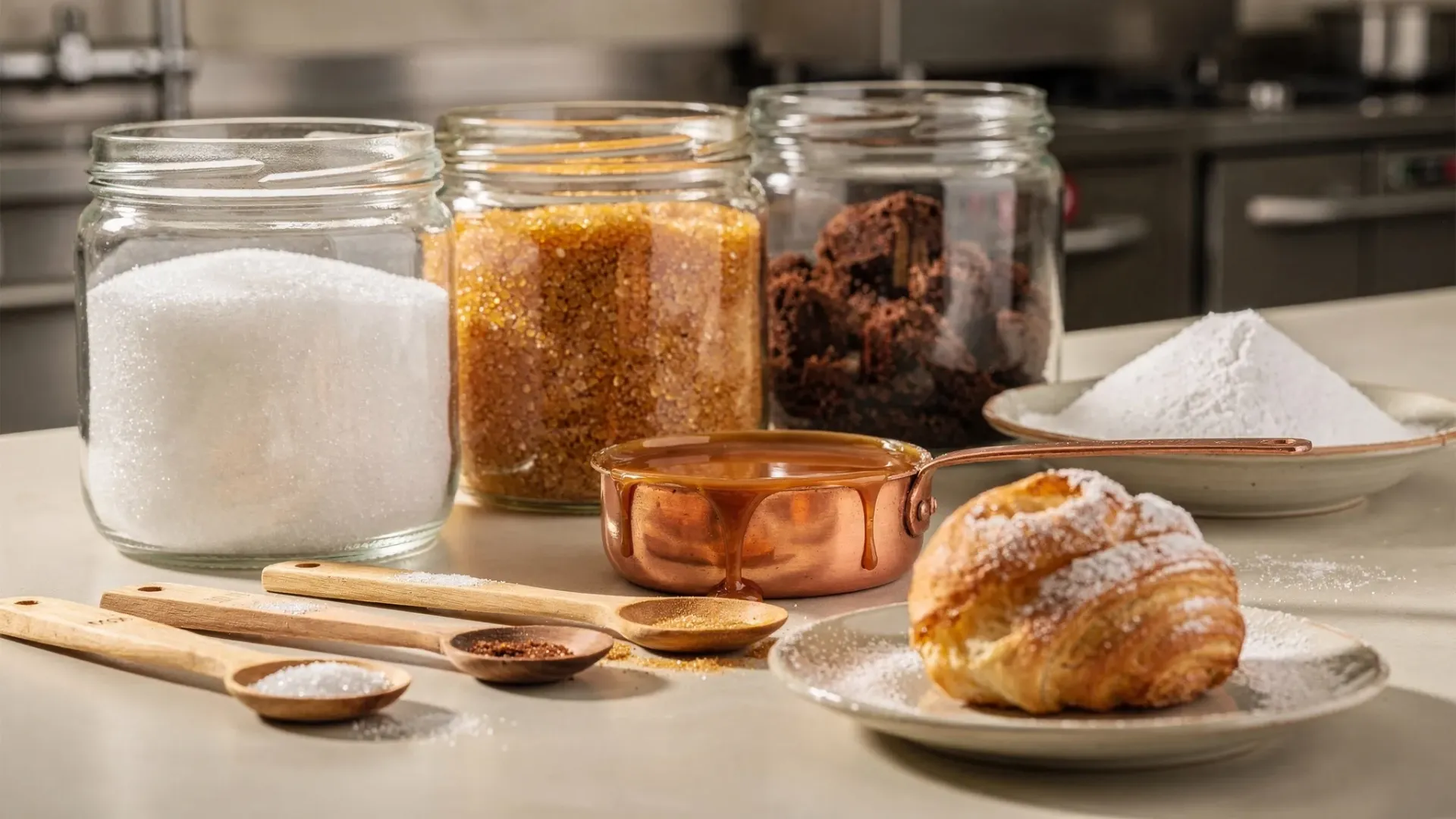
The sweet facts about sugar extend well beyond sweetness. In commercial baking and food production, sugar can influence texture, moisture, colour, flavour, fermentation and consistency. Understanding these functions helps bakeries, restaurants, caterers and food manufacturers choose the right sugar and test recipe changes more carefully.
Sugar does more than make food taste sweet. It can affect tenderness, moisture, spread, browning, fermentation, freezing and product structure. Because these functions differ by recipe and process, commercial food businesses should select the correct sugar grade and test any reduction or substitution before changing production.
Sugar is a functional ingredient. Its effect depends on the product, the amount used, the other ingredients and the production method. A change that works in a beverage may not work in a biscuit, cake, sauce, frozen dessert or confectionery product.
Sugar can influence tenderness, spread and structure in baked products. It competes for available water and affects how flour, starch, eggs and fats behave during mixing and heating. This is one reason why reducing sugar can change more than sweetness. A finished product may become firmer, drier, paler or less consistent.
Sugar attracts and binds water. In the correct formulation, this can support moisture retention and influence the texture of cakes, fillings, sauces and confectionery. The result still depends on the full recipe, processing conditions, packaging and storage. Sugar should never be treated as a guarantee of a particular shelf life.
Sugar contributes to colour and flavour during heating. Caramelisation occurs when sugars break down under heat. The Maillard reaction involves sugars reacting with amino compounds from ingredients such as flour, milk or eggs. Both processes can create brown colour and deeper flavours, but they are not the same reaction.
In yeast products, sugar can support fermentation when the recipe and process are balanced. Larger amounts can change yeast activity, so sweet doughs often need a formulation developed for that product. In frozen desserts, dissolved sugar lowers the freezing point and can help influence softness and scoopability.
Commercial buyers should match the sugar to the product specification, production process and desired result. Crystal size, colour, moisture and flavour can all affect performance.
Refined white sugar suits many applications where predictable sweetness, a clean colour and controlled crystal size are important. Depending on the grade, it may be used in beverages, confectionery, dairy products, sauces, baked goods and general food production.
Brown sugar contributes a deeper colour, more pronounced flavour and additional moisture compared with refined white sugar. It is often considered for biscuits, sauces, glazes, marinades and baked products where these characteristics support the intended result. It should not be treated as nutritionally superior simply because it is brown.
Finer crystals dissolve more quickly and may suit products such as meringues, foams and fine textured batters. Icing sugar is designed for smooth icings, dusting and similar applications, while coarse sugars may suit toppings or decorative finishes. These general categories do not mean that Golden Fry supplies every sugar type mentioned in this article.
Commercial customers can review the current Golden Fry sugar range and confirm the available grades, pack sizes and supply requirements for their operation.
Not always. Replacing white sugar with brown sugar can change moisture, colour, flavour and spread. Replacing granulated sugar with a liquid sweetener changes the water balance and may affect mixing, baking and texture. Sugar substitutes may provide sweetness without delivering the same bulk, browning, moisture control or structure.
Commercial kitchens and manufacturers should test changes under normal production conditions. Record the original formula, the revised formula, process settings, batch yield, finished texture, colour and customer acceptance. A small controlled trial is safer than changing a full production run without evidence.
Caramelisation is the breakdown and browning of sugar during heating. The Maillard reaction occurs when certain sugars react with amino compounds from proteins. Both can contribute colour and flavour, but the result depends on ingredients, temperature, moisture, acidity and processing time.
For consistent commercial results, control the process rather than relying only on colour. Use suitable equipment, follow the approved recipe and record any changes to heating time or batch size. Hot sugar syrups and caramel can cause serious burns, so trained staff should follow the workplace procedure and use appropriate protective equipment.
Sugar reduction should begin with the function sugar performs in the product. If sugar supports texture, bulk, moisture, browning or preservation, reducing it may require changes to other ingredients or the process. There is no reliable percentage reduction that works for every commercial recipe.
The World Health Organisation recommends limiting free sugars as part of a balanced diet. Businesses can read the World Health Organisation healthy diet guidance for general nutrition information. Product development decisions should also consider the intended serving, the full nutritional profile and applicable labelling requirements.
Commercial buyers should check the product name, grade, ingredients, allergen information where relevant, batch details, storage instructions and supplier specifications. Food manufacturers should also confirm how the ingredient will be declared on the finished product label.
The National Department of Health provides South Africa’s official food control regulations for food labelling, hygiene and related requirements. Businesses should obtain qualified advice if they are uncertain about the rules that apply to a product.
Sugar crystallises when dissolved sugar molecules form an organised crystal structure. Cooling, concentration, agitation and stray sugar crystals can influence the process. Some products require controlled crystallisation, while clear syrups and smooth caramels usually do not. Commercial teams should follow a tested formula and keep equipment clean to manage the result consistently.
Sometimes, but the finished product may change. Brown sugar can add moisture, colour and a stronger flavour, which may affect spread, texture and appearance. Before changing a production formula, test a small batch under normal operating conditions and compare yield, colour, flavour, texture and handling against the approved white sugar version.
Store sugar in a clean, dry area away from moisture, pests, chemicals and strong odours. Keep opened stock sealed in suitable food-grade containers and label it with the sugar type and batch details. Follow the business’s stock rotation and food safety procedures so the correct grade is used for each recipe.
The sweet facts about sugar are practical: sugar affects far more than sweetness. It can influence texture, moisture, colour, flavour, fermentation and consistency. Commercial food businesses should choose the correct grade, protect it during storage and test formulation changes before applying them to full production.
To discuss current sugar grades, pack sizes, commercial quantities and delivery requirements, contact Golden Fry with details about your business and intended application.



